Entry 3Base colour
Yellow Base
A yellow base colour, from muted to bright.
y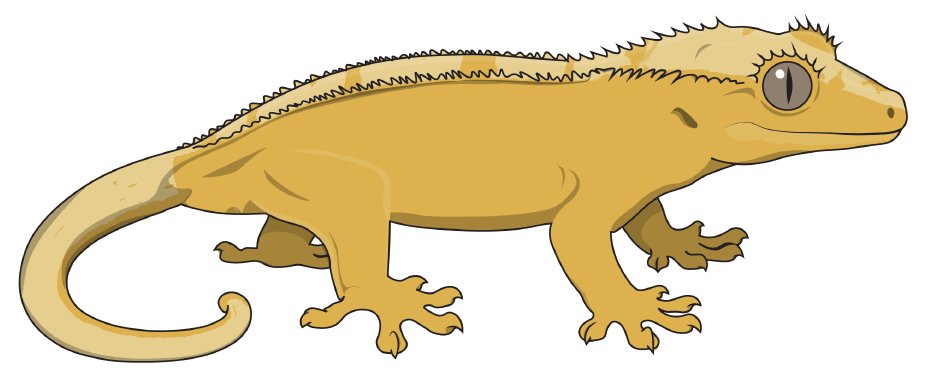
What it looks like
Yellow Base gives a yellow body colour, from muted to bright, and lighting and colour state change how it looks in photos. Foundation Genetics describes yellows as naturally bright with little dark pigment, usually wearing white or cream pattern; the odd orange pattern tends to fade to cream with time.
Foundation Genetics also describes yellow as a second layer over the other base colours, so strong tiger markings can break it up and let black or red show through around the knees, toes and tiger breaks. Foundation Genetics notes that many yellows can fade in old age to an almost lavender or rust tone, so an old yellow can be mistaken for a lavender or red, which has led some breeders to think lavenders or reds produced yellows. To tell a yellow from a heavily patterned harlequin, Foundation Genetics suggests checking around the chin and the cusp of the front legs: harlequins lack colour or stay dark there, while yellows are yellow or white. Over Black Base it reads as olive, and over Red Base as orange.
The series
Same animal, same seed. Only this gene changes. Open any one in the builder.
With another gene
The same gecko before and after.
Phantom on Yellow is Cream
Two copies of Phantom blend melanin into the yellow: cream to buckskin.
Named combinations
Morphs that need this gene and at least one other.
Blondeeasy to breed
A light yellow gecko with yellow rather than white along the back, clean and without dark blending. Breeders use the name loosely, so there is no single recipe.
NeedsYellow BaseHypo
Brindlequinadvanced
A Harlequin broken up by strong, brindled tiger banding into yellow, white and dark bands. Foundation Genetics defines it as a white-pattern Harlequin on a yellow base with strong tigering and lighter pinning, and calls it a combination rather than a single gene.
NeedsYellow BaseWhite PatternHarlequinPinstripeTiger
C2difficult
A clean, cream-on-cream look with very little dark pigment, reduced even under the tail base and around the kneecaps. The C2 name belongs to AC Reptiles' line from a cream-on-cream founder; Yellow Base with Hypo gives a similar pale cream, but only that ancestry makes a C2.
NeedsYellow BaseHypo
Citruseasy to breed
Bright citrus-orange to yellow-orange, more saturated than Tangerine alone, with Yellow Base boosting the orange. Citrus is also AC Reptiles' line name, and a citrus colour does not require Tangerine.
NeedsYellow BaseTangerine
Creamtakes some work
An expression of Phantom: Phantom blends Yellow Base toward pale cream or warm tan, the pattern shows less, and pigment thins under the tail base and around the kneecaps.
NeedsYellow BasePhantom
Creamsicletakes some work
Cream to orange: the warm tones of Yellow Base lightened by Hypo, shifted toward peach when Tangerine is added. Foundation Genetics calls it long sought after and hard to produce consistently, and there is more than one route to it.
NeedsYellow BaseHypo
Oliveeasy to breed
Olive to greenish-yellow: Yellow Base over Black Base gives olive and khaki-green tones, strongest when fired down and brighter yellow when fired up. Other combinations can look olive too, so there is no universal recipe.
NeedsYellow BaseBlack Base
Orangetakes some work
Orange to orange-red, warmer and more saturated than Yellow Base alone and most vivid when fired up; orange rather than the deep red of Red Base. Orange can also come from orange pattern or Tangerine.
NeedsYellow BaseRed Base
With other genes
Hypolighten to cream
Hypo on Yellow Base lightens toward a clean white cream, the look the C2 line is known for.
Notes
How it is inheritedBreeders treat Yellow as dominant: a gecko with Yellow shows it, and as Foundation Genetics puts it, you need a yellow to make a yellow. Tom Favazza of Geckological reported 22 yellow babies over two years from one pale-yellow male bred to three black-based females, which fits that picture. It's one breeder's own geckos, but it's real breeding results.
Where breeders differWhat's less clear is exactly how Yellow mixes with Red or Black underneath, and Favazza's results don't settle how Black and Red relate.
Where it came fromNo single founder is on record for this name. It is shared hobby vocabulary. Foundation Genetics describes early hobby geckos ranging from very dark to light tan or dirty yellow, with yellow among the forms that selective breeding separated out. Tom Favazza's 2016 breeding report is an important record, though he isn't credited with discovering Yellow.
In Gecktopia
Yellow is its own dominant gene in the game, separate from the Black/Red slot. It sits on top of the base: on Black it reads as Olive, on Red as Orange. One and two copies look alike but are kept apart, because they pass on differently.
- Passed on in the game as dominant.
Sources
Foundation Genetics, current online edition
Foundation Genetics contributors, date not established
Only the relevant sections were reviewed.
Keeper’s Choice crested gecko descriptions
Pangea Reptile, date not established
Anthony and Jessica Vasquez, Tom Favazza and breeder collaborators, date not established
Foundation Genetics Part 2.1: Base Color Morphs
Foundation Genetics contributors, date not established
Notes on Crested Gecko Genetics
Tom Favazza / Geckological, 2 August 2016
Foundation Genetics contributors, date not established
Entry 3 of 33. Every gecko on this page was drawn from its own genes just now, by the renderer that draws them in the game.