Morph library / Structure
Pinstripe
Cream along the rows of pins down the dorsal.
Shows on the dorsal.Incomplete dominant: one copy shows, and two copies show more strongly.
Try it in the builder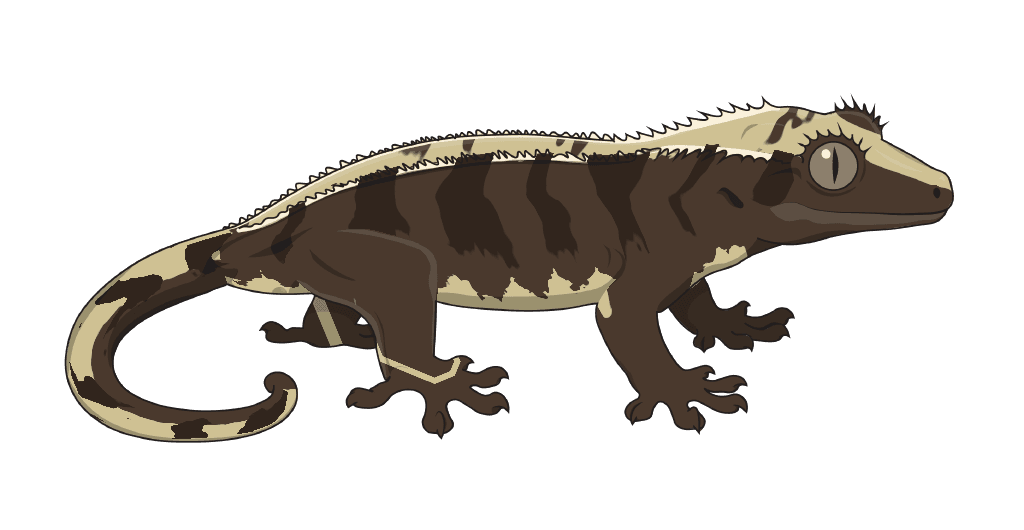
What it looks like
Pinstripe puts cream along the rows of pins that run down the dorsal, from the neck to the base of the tail.
It is plain dominant: one copy draws the whole rows. What breeders call a partial pinstripe is Tiger cutting across the rows, and every gecko carries Tiger, so most pinstripes are broken somewhere.
The line along the middle of the side is a Quadstripe, which is its own gene.
This page shows Pinstripe drawn from its genes. For the written reference, inheritance tables and breeder notes, see the crested gecko morph guide on ReptiDex.
Side by side
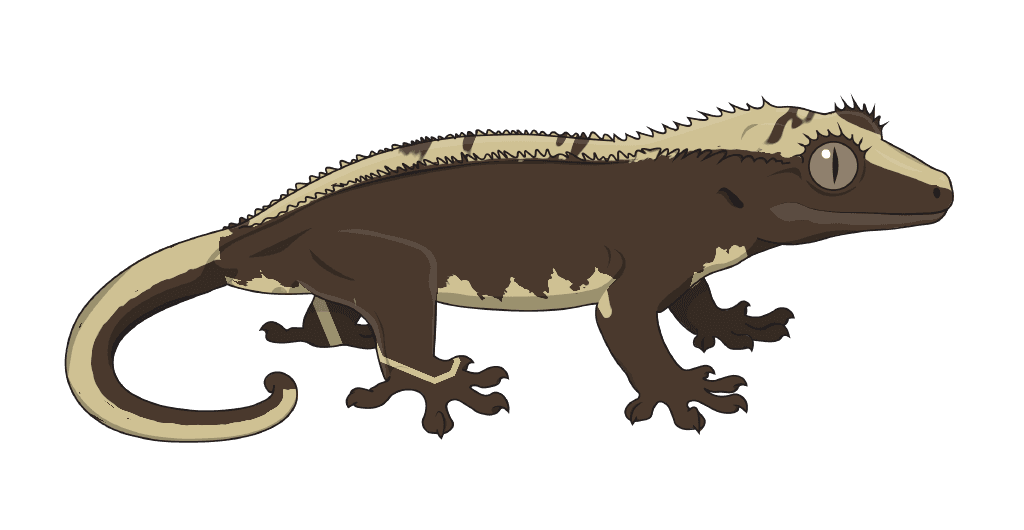
No Pinstripe
Open in the builder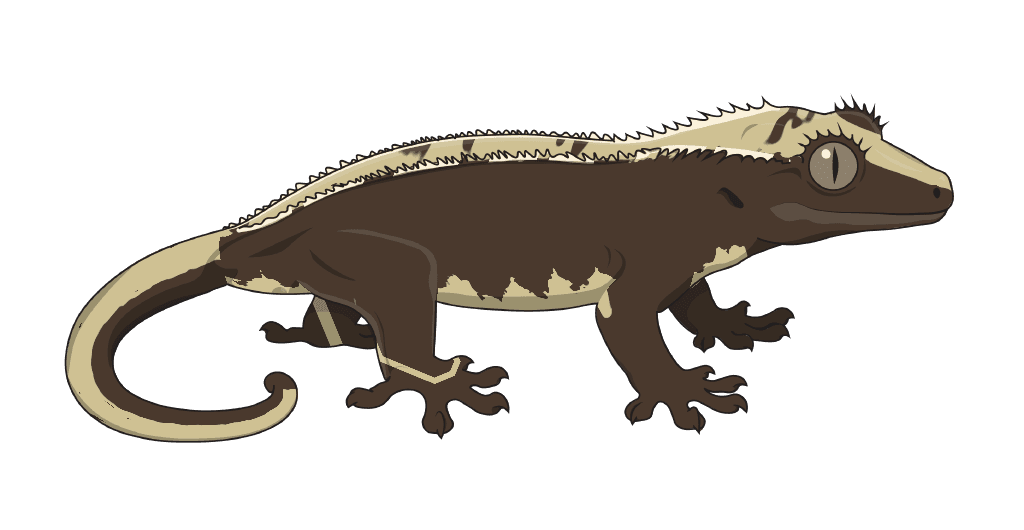
Pinstripe, with the pins unbroken
Open in the builderPinstripe with visible tigering, breaking the rows
Open in the builder
With other genes
Empty Back makes a pinstripe stand out
Empty Back is a dark overlay on the dorsal, and it goes under the pin rows, so the cream lines read stronger against it.
Before 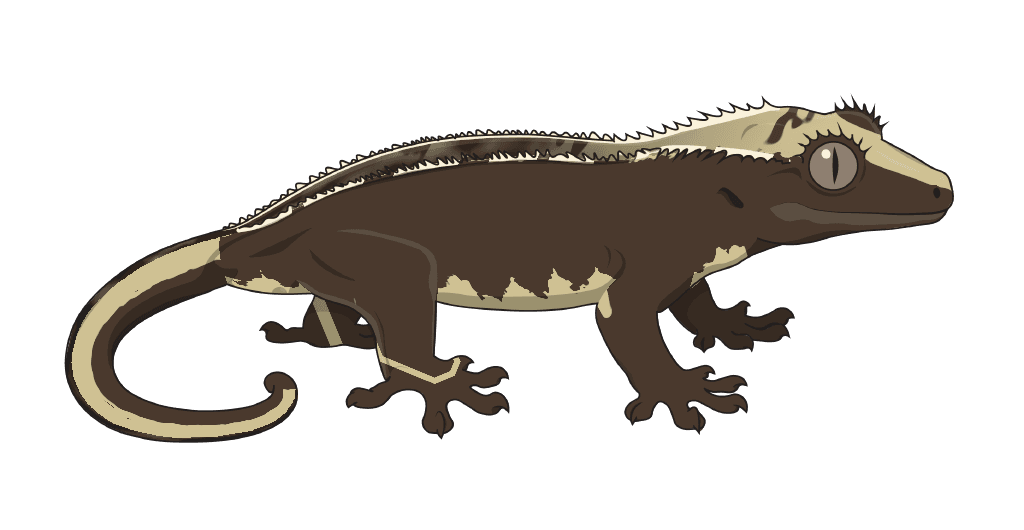
After Phantom covers a pinstripe
Phantom is a light film that lies over the pattern and the pin rows alike, so the same pinstripe reads faint.
Before 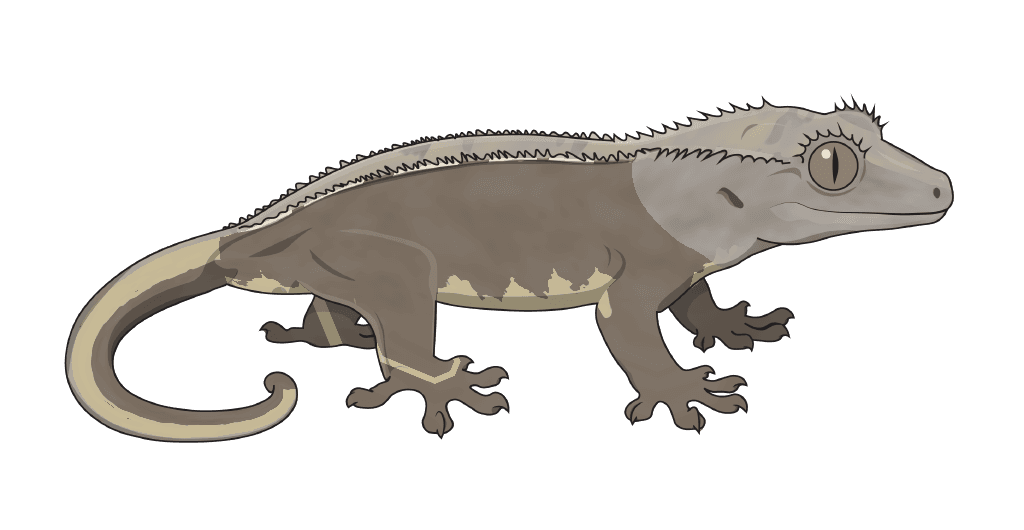
After
In depth
Raised scales along dorsal midline creating a distinct ridge or stripe. Dominant expression creates visible raised scalation. Interacts with Tiger to create brindle and reverse pin phenotypes. Homozygous expression more pronounced than heterozygous.
How to spot it
Look for raised scales along the spine/back. Pinstripe animals have noticeably textured dorsal ridges.
Where it came from
Pinstripe was one of the early recognized morphs in the hobby.
How it is inherited
Incomplete dominant: one copy shows, and two copies show more strongly.
Written as PIN+ and pin
Pinstripe is a structural modification, not color-based. White Pattern fades when Phantom is present on Pinstripe animals. Source: Foundation Genetics Part 1.
Beside other genes
Pinstripe and Tiger one covers the other
Tiger and Pinstripe ratio determines pattern phenotypes including brindle and reverse pin. Ratio-dependent expression.
Pinstripe and Axanthic strengthen each other
Axanthic + Pinstripe creates strongest paper-white pattern expression in species. Removal of xanthophores enhances white pattern.
Morphs it takes part in
Brindlequinadvanced
Tri-color brindle pattern with yellow, white, and dark bands/patches. Tiger breaks Harlequin concentration into brindle stripes.
Needs Yellow Base, White Pattern, Harlequin, Pinstripe, Tiger.
Confettitakes some work
Pinstripe dorsal ridge with scattered Dalmatian spots overlaid. Spot density varies by individual. Visually distinct from either Dalmatian or Pinstripe alone.
Needs Dalmatian, Pinstripe.
Phantom Pinstripetakes some work
Dark melanin blending with raised dorsal pinstripe. White Pattern fades tail-to-head. Darker head with lighter tail pattern.
Needs Phantom, Pinstripe.
Quadstripedifficult
Four clearly defined dorsal ridges or stripes running the length of the body. More complete and defined than heterozygous Partial Pinstripe. Reduced or absent lateral patterning.
Needs Pinstripe.