Morph library / Colour modifier
Phantom
Hides the dorsal pattern, which is what makes a bi-color.
Shows on the dorsal.Recessive: it takes two copies to show.
Try it in the builder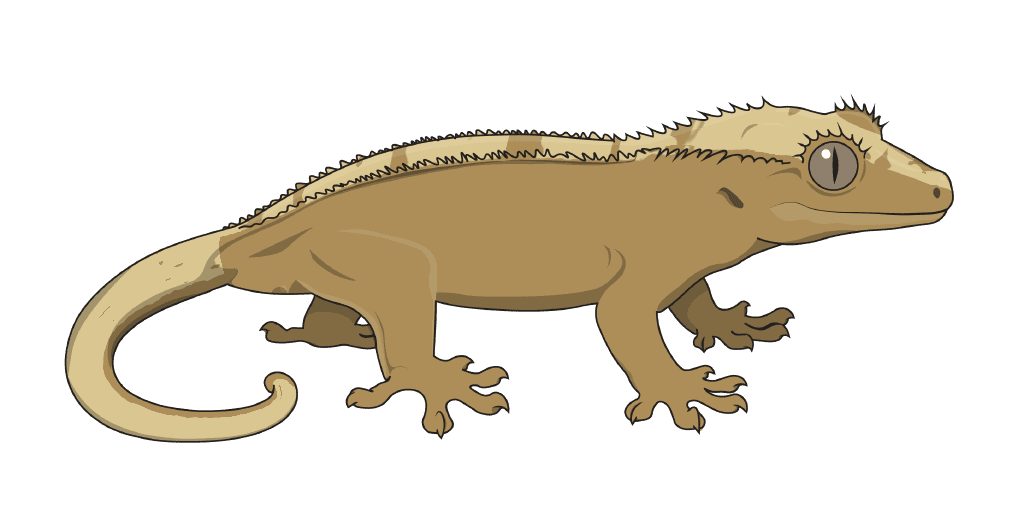
What it looks like
Phantom hides the pattern on the dorsal, so the animal reads as two halves: a clean dorsal above, and the pattern and colour below. That is what a bi-color is.
It sits on any base colour. A Phantom can be red, orange, yellow or black; it does not mean buckskin by itself, although blending melanin into a light base is where buckskin, cream and tan come from.
It takes two copies to show. One copy is carried and passed on unseen.
This page shows Phantom drawn from its genes. For the written reference, inheritance tables and breeder notes, see the crested gecko morph guide on ReptiDex.
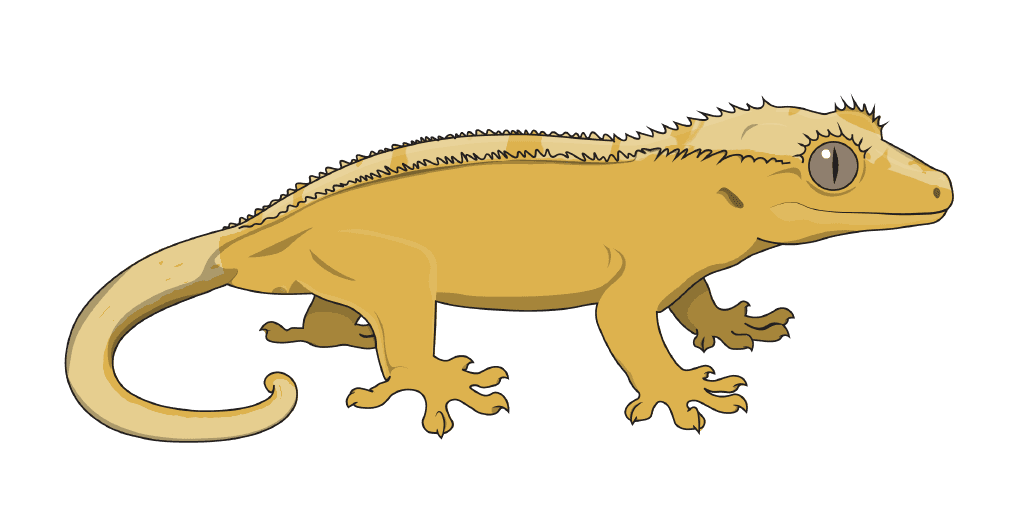
Side by side
Yellow, no Phantom
Open in the builderYellow with Phantom: the dorsal goes quiet
Open in the builder
In depth
Melanin-producing trait that creates various phenotypes including bi-color, patternless, buckskin, cream, and tan appearances. Blends melanin with base colors, particularly visible on yellow-based animals. Expression ranges from high expression (strong bi-color, patternless) to low expression (subtle melanin blending). Affects pattern expression and can suppress white pattern on raised scalation. Key finding: bi-color, patternless, buckskin, cream, and tan are NOT separate traits. They are all phenotypic expressions of the single Phantom trait.
How to spot it
Rule 1: Any bi-color or patternless animal has Phantom. Rule 2: Yellow-based animal with melanin blending (buckskin, cream, tan) = Phantom; clean yellow = Hypo. Rule 3: On Pinstripe animals, White Pattern fades tail-to-head when Phantom present. Rule 4: Lower expression Phantom + Pinstripe shows darker head, lower lateral pattern present, upper lateral absent.
Where it came from
Hobby historically broke this single trait into multiple named phenotypes (bi-color, patternless, buckskin, cream, tan), causing widespread confusion. Some hobbyists thought Phantom was non-Mendelian. This has been debunked through systematic breeding trials.
How it is inherited
Recessive: it takes two copies to show.
Written as PH+ and ph
Follows Mendelian recessive genetics. Definitively Mendelian, not non-Mendelian as some previously believed. The highly polymorphic nature of crested geckos creates alternative phenotypes from this single trait. Source: Foundation Genetics Part 1, Sessions 01, 03, 06.
Beside other genes
Phantom and White Pattern pull against each other
Phantom suppresses White Pattern on Pinstripe raised scalation. WP fades tail-to-head when Phantom present on Pinstripe animals.
Morphs it takes part in
Axanthic Phantomdifficult
Deep monochrome grey to black coloration with no warm tones. Strong melanin presence without xanthophore interference.
Needs Axanthic, Phantom.
Bicoloreasy to breed
Two-tone appearance with darker dorsal and lighter laterals. Color contrast varies based on base color and pattern present. Phantom adds melanin differentially across body regions.
Needs Phantom.
Creamtakes some work
Cream to buckskin base coloration. Phantom reduces melanin uniformly across the body, blending the base toward pale cream or warm tan depending on expression level. Pattern visibility is reduced. Reduced pigmentation visible under tail base and around kneecaps.
Needs Yellow Base, Phantom.
OG Noirdifficult
Silver-grey to near-white body with no warm pigmentation. Cool, achromatic coloration throughout. High-contrast pattern elements remain in grey tones. One of the most visually dramatic double recessive combinations.
Needs Axanthic, Phantom.
Patternlesseasy to breed
Clean appearance with minimal to no visible pattern. Base color visible throughout. Pattern structure may exist but lacks color expression. Different from PTL allele which removes pattern entirely.
Needs Phantom.
Phantom Pinstripetakes some work
Dark melanin blending with raised dorsal pinstripe. White Pattern fades tail-to-head. Darker head with lighter tail pattern.
Needs Phantom, Pinstripe.
Silver / Grey Phantomdifficult
Silver to grey coloration. Hypo lightens the Phantom dark blending to create metallic-looking tones.
Needs Phantom, Hypo.