Where patterns live on a crested gecko
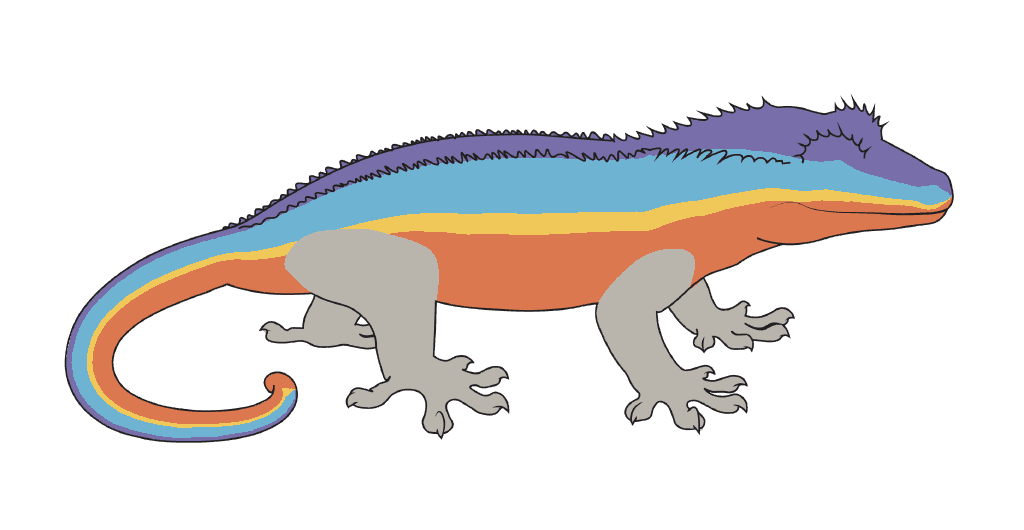
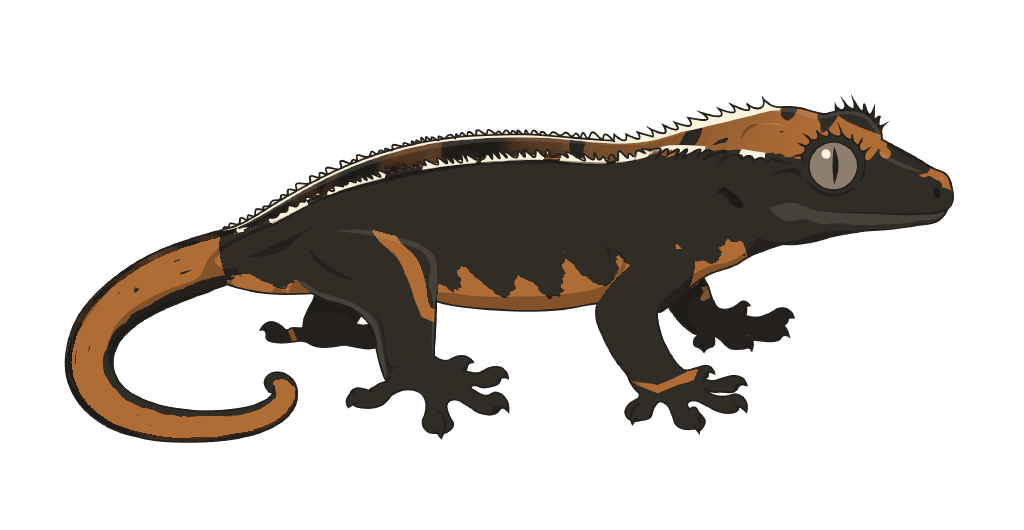
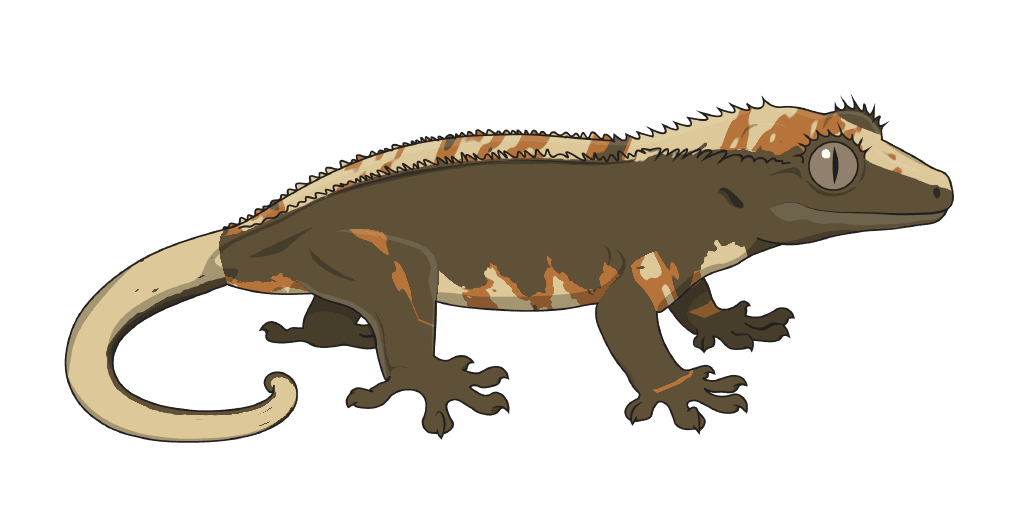
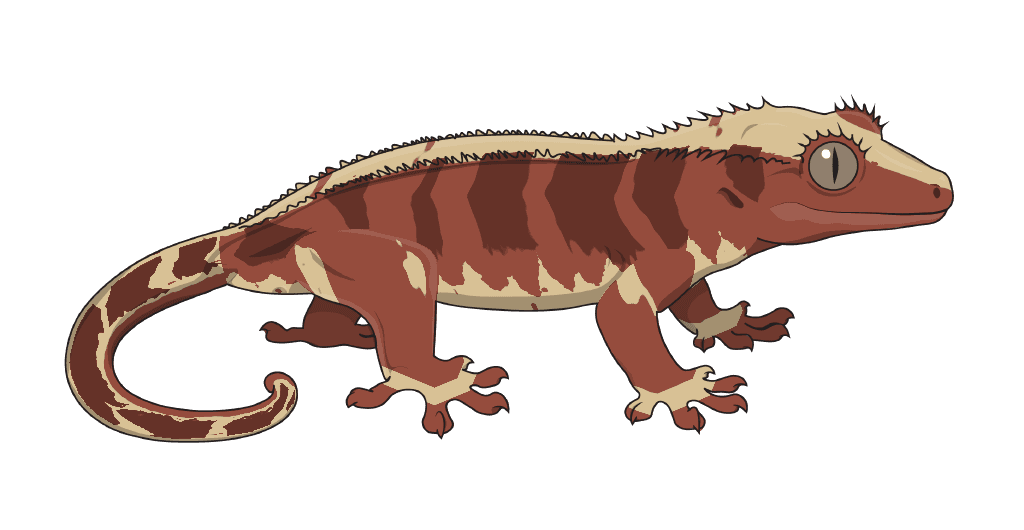
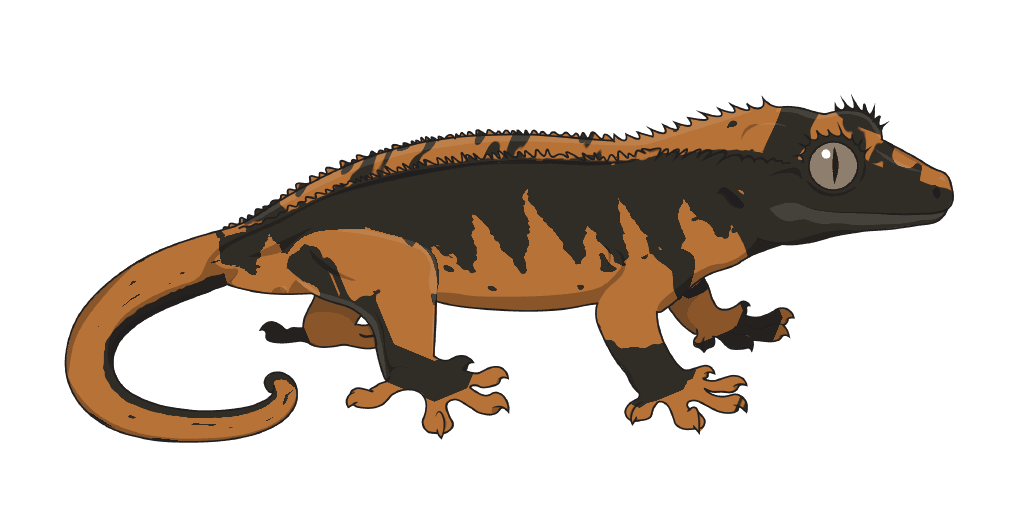
The dorsal and the three sections of the side, and which pattern belongs to each. The same rules the renderer follows.
The words breeders use
Words first. The crests are the pins that form the diamond on the head. The pins are the rows of raised, spiky scales that run down the animal's back from the head to the tail.
Look at a crested gecko from the side. Above the pins is the dorsal (the dorsal area). Below the pins, down to the belly, is the side (the laterals). Breeders read the side in three sections:
| Section | Where | What lives there |
|---|---|---|
| Dorsal | Above the pins | Pattern on every gecko: mostly solid, with the base colour showing through slightly. Only another gene hides it (Empty Back reduces or clears it; Patternless removes it). |
| Upper | Just below the pins | Harlequin, reaching up from the middle |
| Middle | The centre of the side | Quadstripe; Harlequin; the tips of high-intensity Flame |
| Lower | Down to the belly | Flame |
Flame and Harlequin
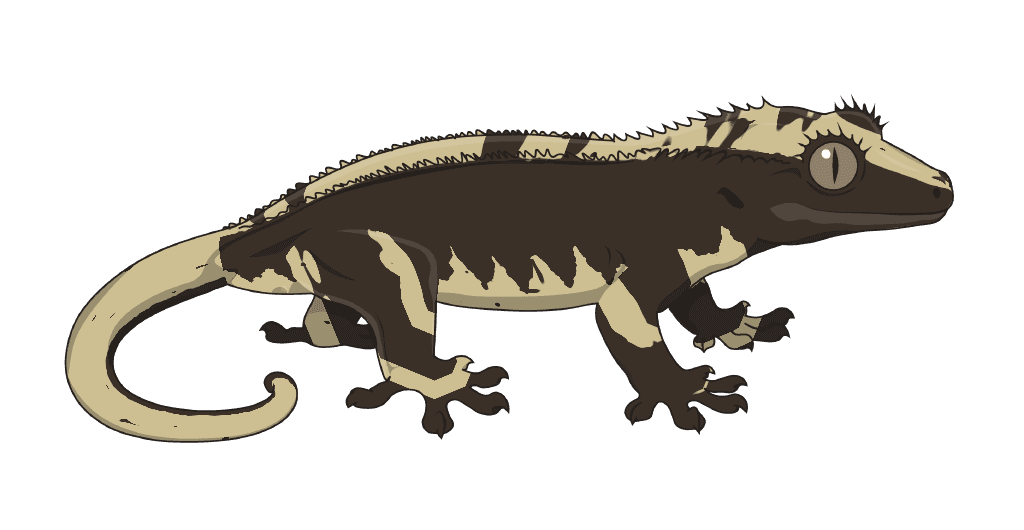
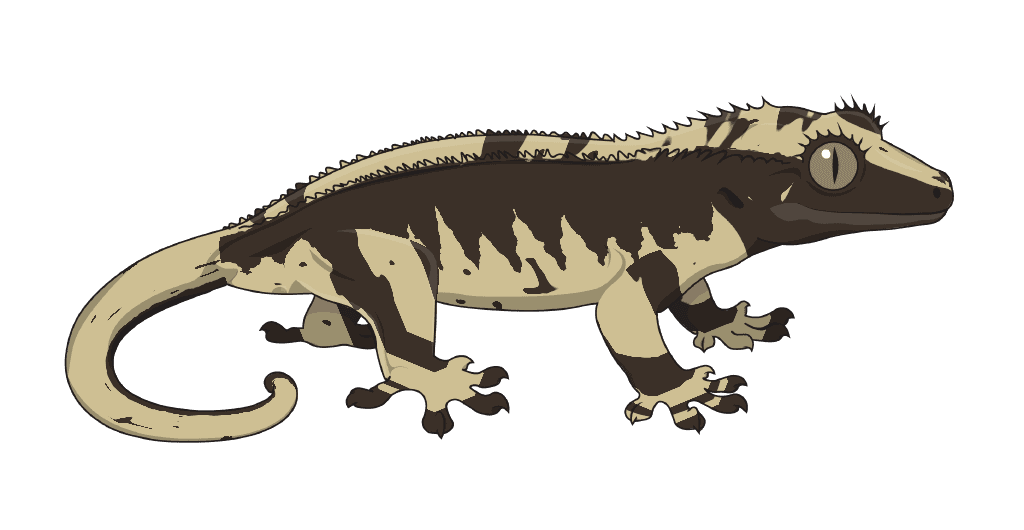
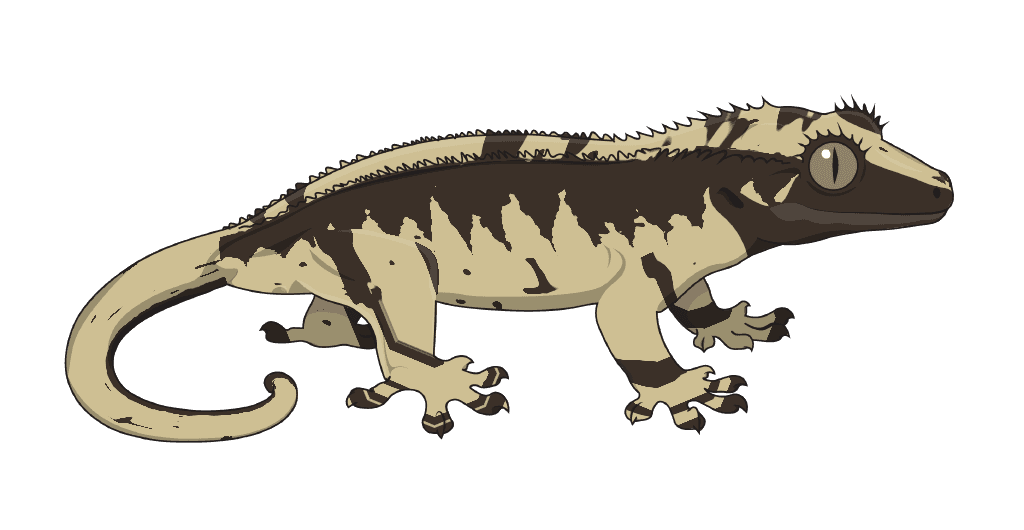
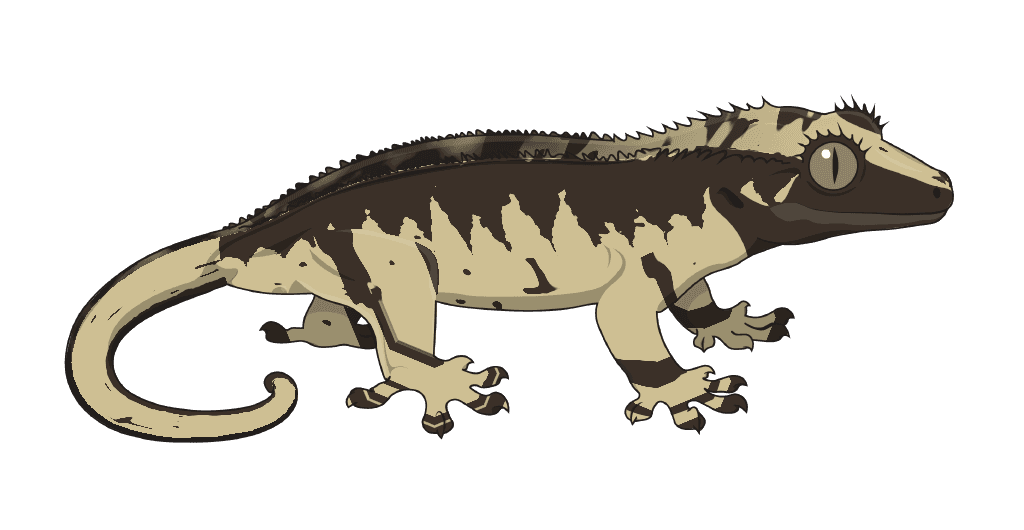
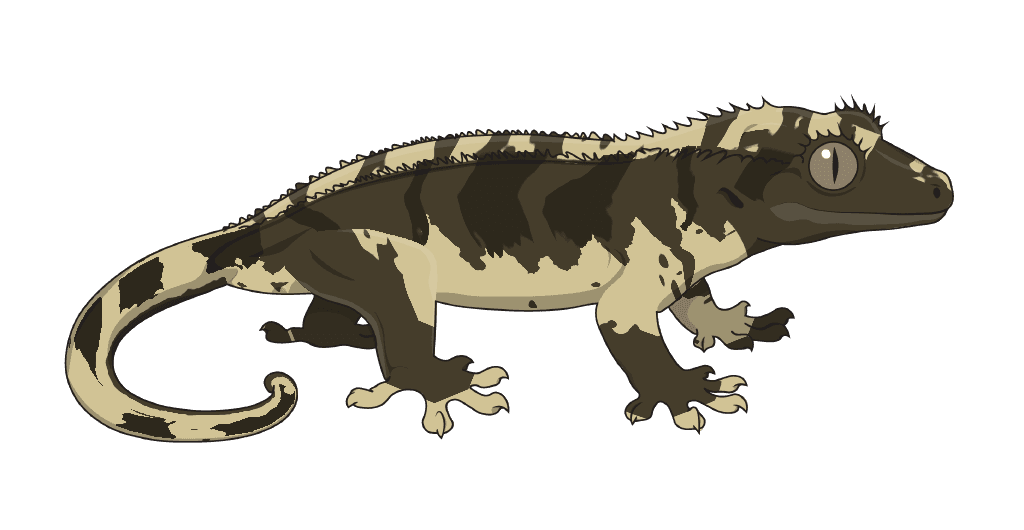
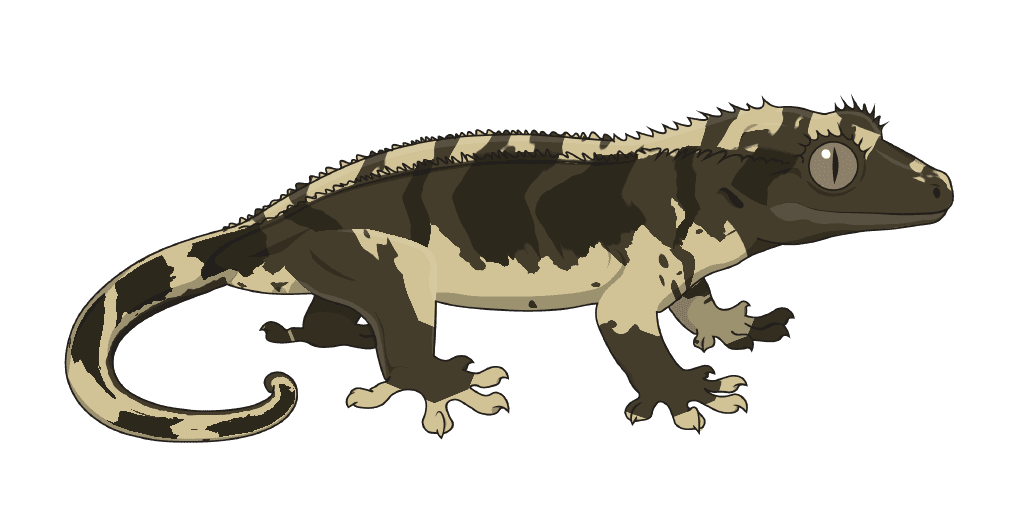
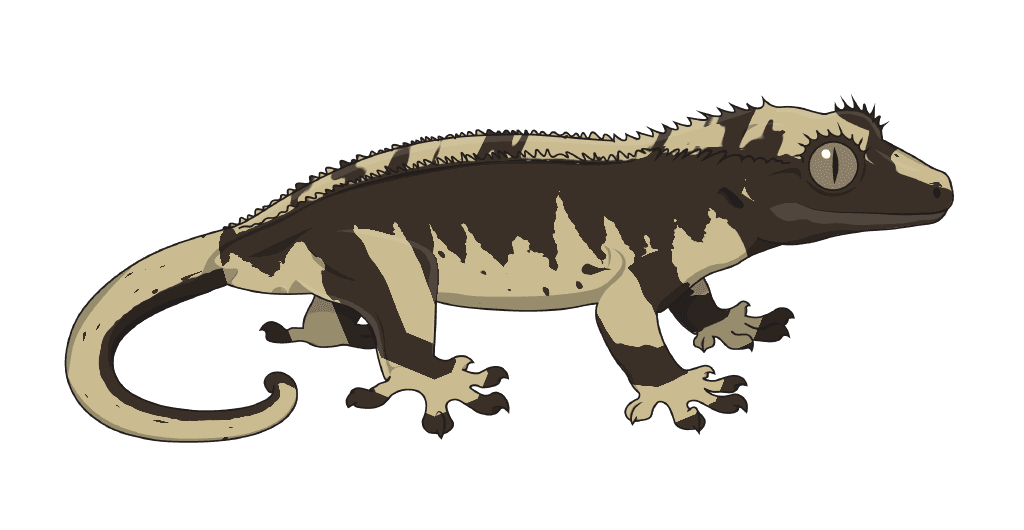
Flame and Harlequin climb. Their pattern rises up the side in vertical zig-zags, like flames licking upward. How far they climb and how much of the side they cover depends on their intensity:
- A Flame lives in the lower section and reaches up toward the middle. A high-intensity Flame creeps into the middle, but doesn't live there.
- A Harlequin lives in the middle and upper sections: its zig-zags climb most of the way up the side. It usually doesn't join the dorsal: just below the pins there are breaks where the base colour shows through. A very high-coverage harlequin can reach the pins in places.
- The more intense the Flame or Harlequin, the more of the side it covers.
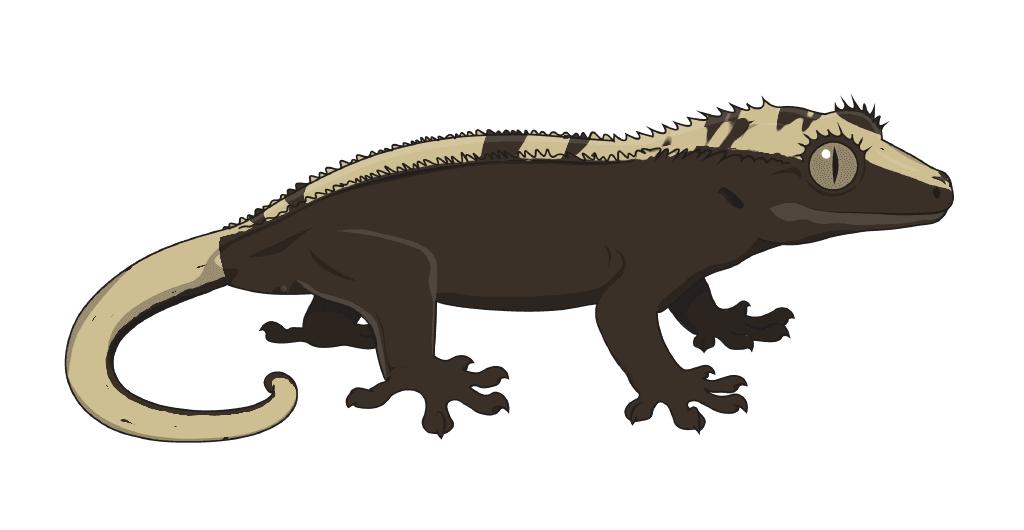
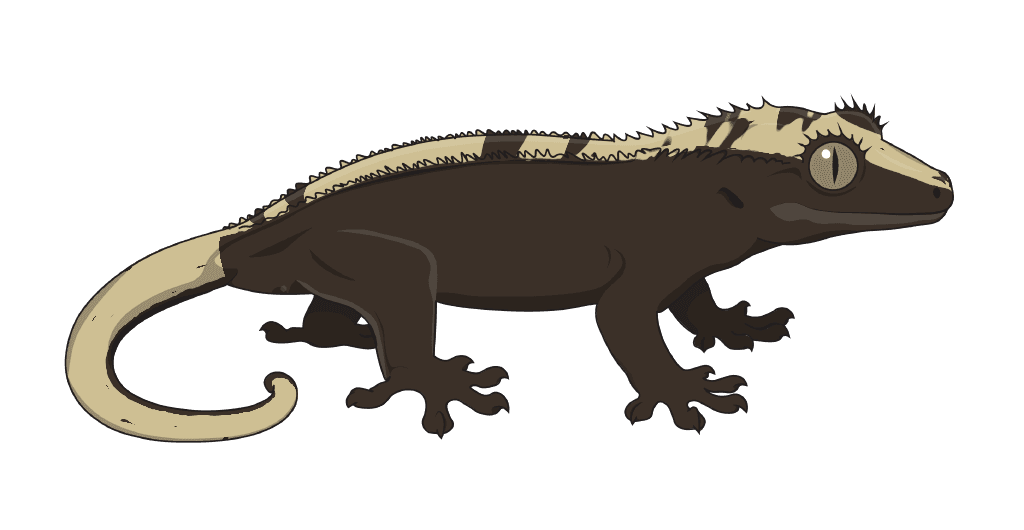
Quadstripe
Quadstripe is a horizontal line along the middle of the side, running along the body between the legs, below the pinstripe.
Tiger and brindle
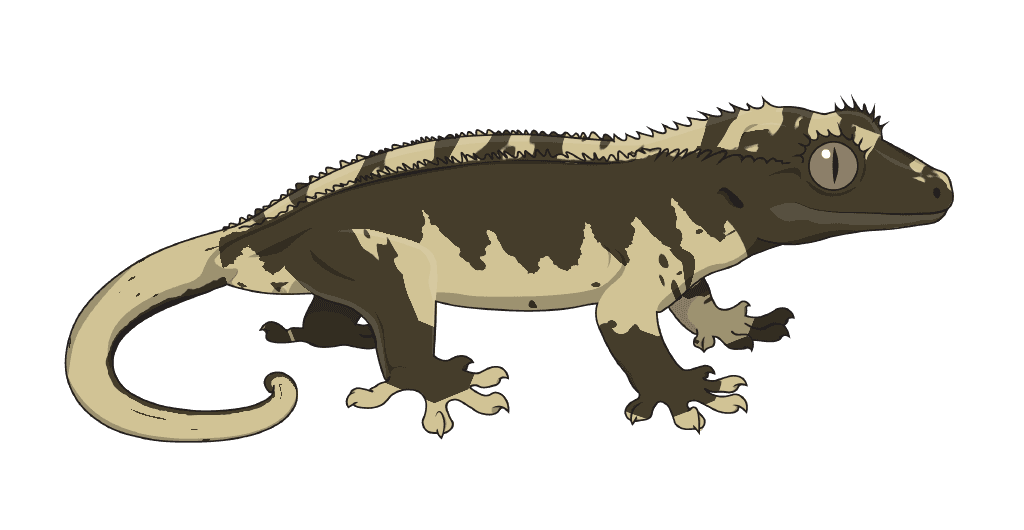
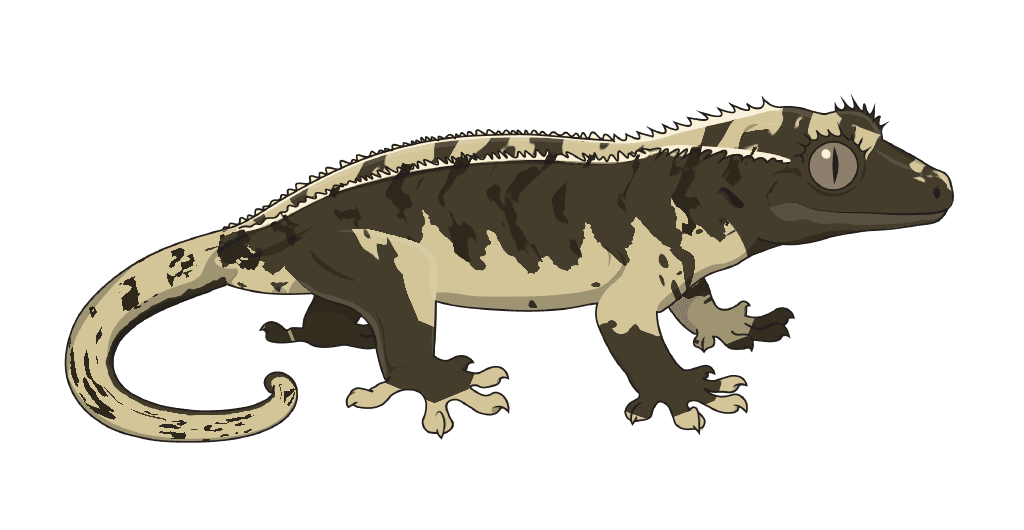
Tiger is on every crested gecko. It pushes the other pattern around, and that is what turns Flame and Harlequin into vertical bands. When a gecko is described as Tiger, the tigering itself shows: bands of darker base colour running down from the base of the pins through the upper and middle side, with the pattern pushed out of them so it sits in the gaps. Brindle is broken tiger: finer bands, broken into pieces.
The two whites: Lilly White and Whitewall
They are different traits and worth keeping apart.
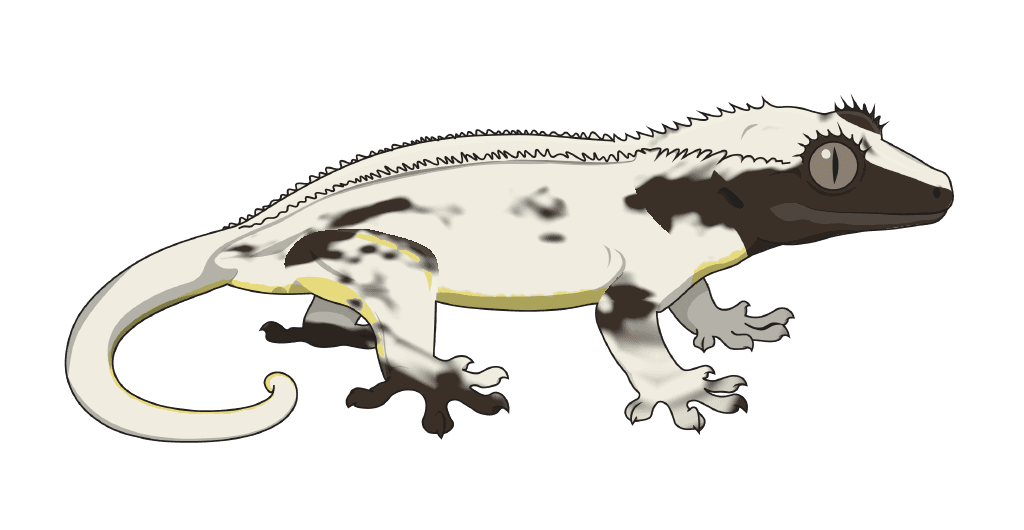
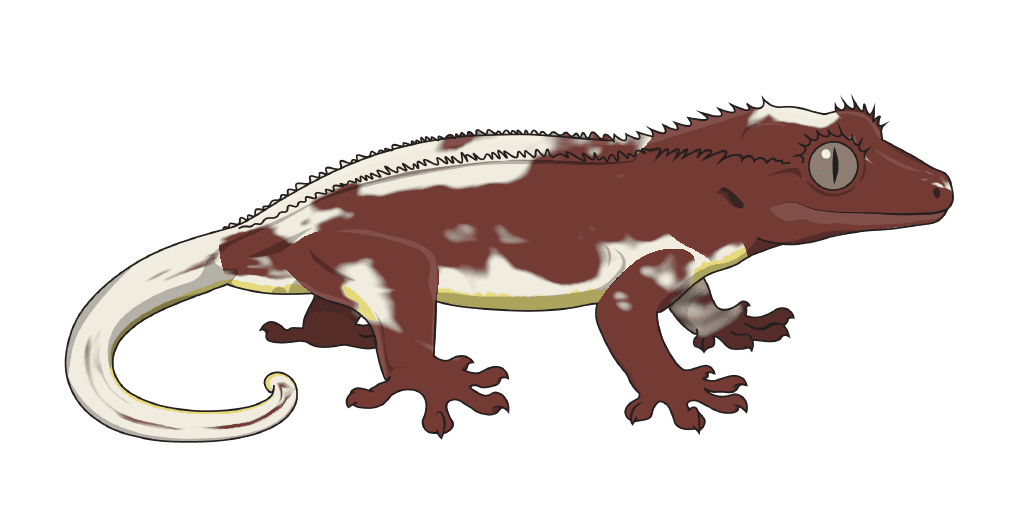
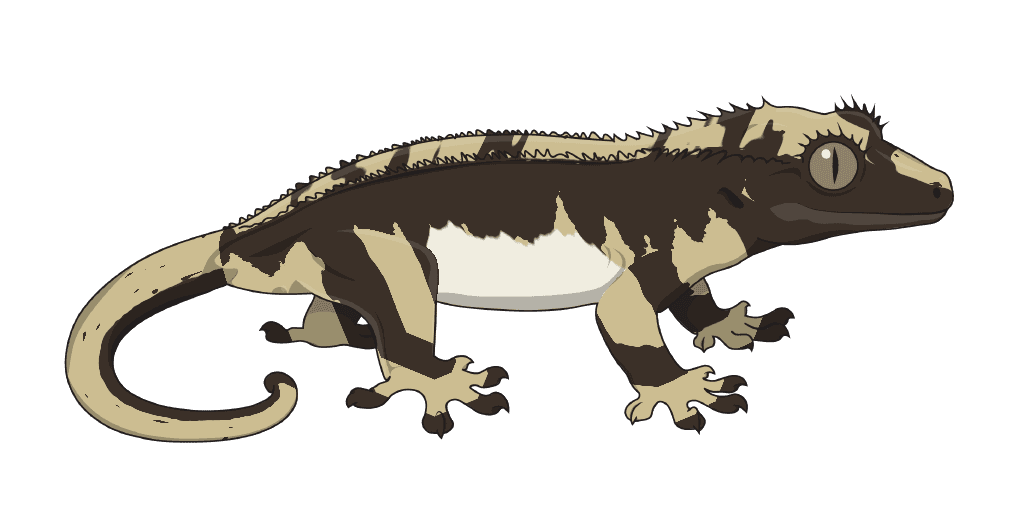
Lilly White whitens the whole animal. The head, the dorsal, the belly, the tail and most of the limbs go white, and what is left of the gecko's own colour sits in irregular patches, mostly along the flank and on the limbs and head. How much colour survives varies enormously. It is recognisable by its "highlighter yellow" accent along the belly line, and on the fringe and kneecaps of a hind leg.
Whitewall is the other one: a solid block of white up the lower side, climbing from the belly with a scalloped top edge, between the front and hind legs. It leaves the rest of the gecko alone and carries no accent.
Both sit on top of the other pattern, and both are creamier than White Pattern, which follows the flame or harlequin shapes rather than covering them.
Legs, dorsal and the numbers
Legs carry pattern too: plenty on a Harlequin, a small amount on a Flame.
The dorsal varies from nearly solid to broken into blocks by bars of base colour showing through.
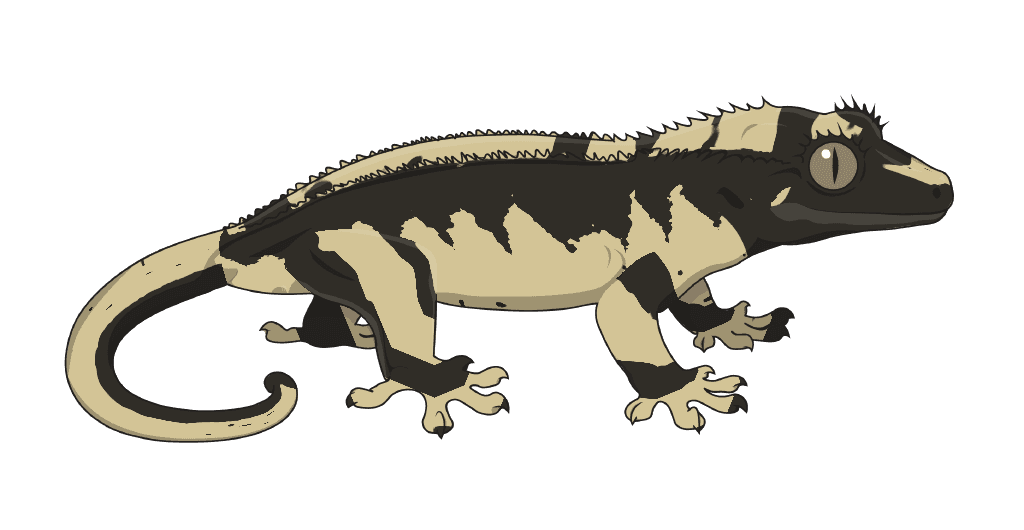
In the game, "how far down the side" is a number from 0 at the base of the pins to 1 at the belly, measured from the artist's pinstripe guide, so the sections follow the gecko's real shape along the whole body and tail. The Zones view in the Pattern Lab shows them.